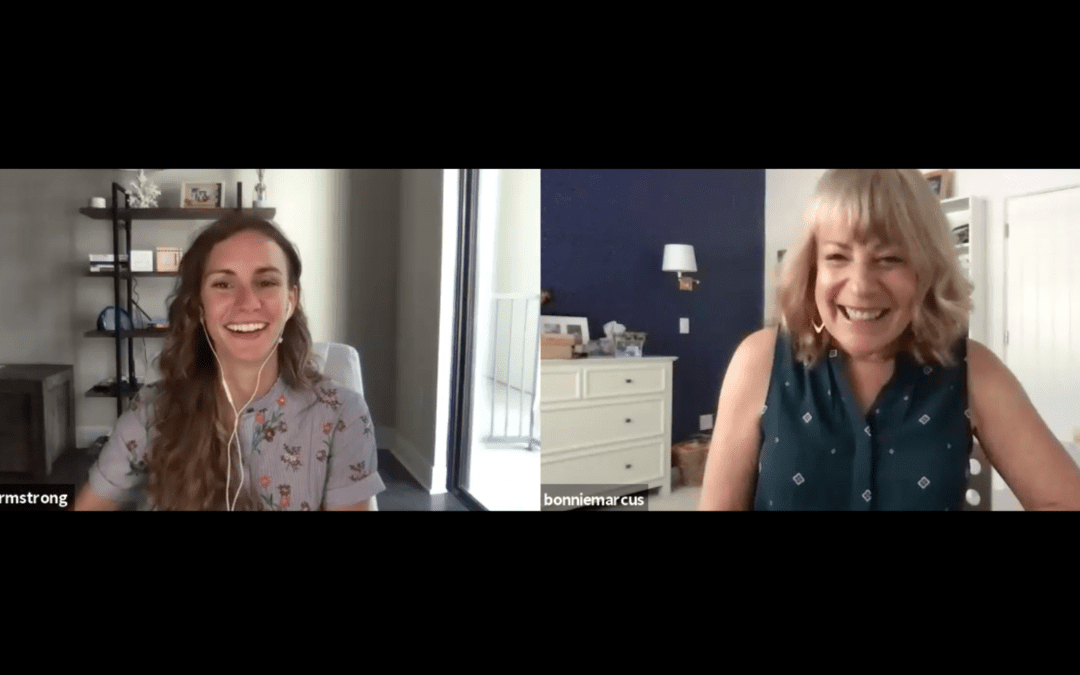
Celebrating Women on Mother’s Day

May 8, 2011 · Posted in friendship, leadership, Women in Business · Comment 

It’s in our DNA. All women, whether or not they gave birth, have the innate qualities to nurture others. In essence, we are all mothers who spend a great deal of our time and energy motivating, supporting, comforting, and loving those around us. These qualities are the foundation of who we are as women; how we present ourselves to the world.

These feminine traits have not always been viewed favorably in the work place. Women have often been squeezed into a box of “traditional maleness” that made us feel uncomfortable and phony. The most efficient path to success in business has always been to take on the qualities of our male colleagues and mimic their leadership and management style. After all, that was the only acceptable model.

But slowly things are changing. Traditional leadership models are changing with the increased realization that feminine qualities of compassion, empathy, listening and nurturing create well-rounded leaders who can move our businesses forward to prosper with integrity.

This Mother’s Day, let us recognize and celebrate what is special about mothers and women in general. Not only do we nurture our family and friends, but we have the unique ability to lead our businesses, country and world to a better place.

Why Are You Fighting So Hard Not to Be Yourself?

When I was a little girl, I wanted to be a prima ballerina. I loved to dance and was fortunate enough to take ballet lessons a few times a week. In my mind, I was on my way to becoming a professional dancer. In fact, I took my ballet shoes with me wherever I went and offered to dance for anyone without hesitation. I had no preconceived notions about my limitations. I had the passion and talent and believed anything was possible.

But somewhere along the way, I received messages that being a ballerina was not for me. I did not have the” right”  body type and certainly the lifestyle of a professional dancer was extremely challenging. The point is that all that energy and passion for dancing; all my dreams of being a prima ballerina were squashed. I no longer believed that I could be whatever I wanted to be. I began to see my life in terms of limitations.

We build our persona or our identity based on what we believe we can or can’t do. In fact, these beliefs define our lives and predict our future. We become prisoners of our own perceived limitations.

How tough would it be for you to push aside your limiting beliefs and open yourself up to a new world of possibilities?

How difficult would it be to listen to your true inner voice and find your passion and purpose in life?

In this inspiring video, Caroline Casey asks, “Why are you fighting so hard not to be yourself?” Her key message is that we pretend to be something we’re not because we lost our belief in ourselves.

Believing in yourself without limitations, without labels, allows you to be the best you can be. Are you up for the challenge?

Watch Caroline and let me know.

Click here to watch.

Owning Our Success

Women are well positioned today to change workplace dynamics and use their strength and talent to assume more leadership positions. Thirty four percent (34%) of American women between the ages of 25 and 34 have bachelor degrees compared to 27% of men, and women have higher GPA’s and are more likely to receive higher graduate degrees.

We have what it takes to make significant changes, but we need to own our success to move forward. The reality is that currently women only hold 18% of top leadership positions. Yes, there is still gender bias as well as challenges balancing work and family for women who want to advance their careers. I believe it’s time, however, to change the focus from the obstacles to the opportunities. It’s time to take responsibility for our own advancement.

In 2010, McKinsey and Company published a report called “Women Matter 2010. Women at the Top of Corporations: Making it Happen.” As part of their research they asked 1500 executives across different industries what are the biggest barriers to increasing gender diversity within the top management of the company? Thirty eight percent (38%) of the women executives interviewed said they see the biggest factor as their hesitancy to promote themselves. In other words, the biggest factor was within their control to change!

It’s time to focus on what we can control; what we can do personally to own our own success and promote ourselves.

What does it take to own your success?

  1. Belief in yourself and an understanding of your value proposition.
  2. Taking credit and acknowledging your accomplishments.
  3. Speaking up and letting others know your opinion and thoughts.
  4. Advocating for yourself. Requesting sponsorship.
  5. Negotiating what’s fair and appropriate in salary and benefits.
  6. Letting go of language that minimizes and sabotages your credibility.
  7. Communicating your value to others.
  8. Being visible within your organization and community to showcase your skills and talent.
  9. Building and leveraging relationships that will assist you to reach your goal.
  10. Having a strategic and intentional focus to advance your career.

We need to own our success to be successful.

Embrace it.

Believe it.

Nurture it.

Communicate it.

Celebrate it.


Take advantage of my FREE 7 Day Boot Camp on Promoting Yourself for Career Success. Sign up on my home page.   or on the right sidebar!

The Business of Storytelling

February 27, 2011 · Posted in Communication, leadership, Women in Business · 1 Comment 

Good stories captivate us. They grab our attention and focus. They transport us to another place and time where our imagination is free to roam and play.

Everyone loves stories. We are mesmerized by good storytellers, and we love to tell our own stories. After all, we are the sum total of all of our stories, real and imagined.

I’ve written before on this blog about the power of stories to connect us with others and how telling or personal story makes our pitch more memorable. But how can business leaders effectively use storytelling? I had not given this much thought until I read Peter Guber’s article last week in Harvard Business Review.

Peter says:

A story is a vehicle that puts facts into an emotional context. The information in a story doesn’t just sit there as it would in a list or data dump. Instead, it’s built to create suspense and engages your listeners in its call to action….Research on memory conclusively shows that all the critical details, data, and analytics are more effectively emotionalized and metabolized by the listener when they’re embedded in a  story – and they become significantly more actionable.

Stories have the power to move others to action. They are inspiring, motivating, and sometimes didactic. They provide what Peter calls “emotional transportation”.

Good stories, well told, turn people into apostles and advocates of your brand, services, mission or cause.

Think about your next staff meeting, sales presentation, or keynote. How can you use a story to provide the emotional transportation you need to move your audience to action?

What Holds Middle Managers Back?

February 13, 2011 · Posted in leadership, Self Promotion, Women in Business · Comment 

This past weekend, I had the opportunity to speak at Harvard Business School’s Dynamic Women in Business Conference. Our panel discussion was titled, Working in Heels: Women in the Workplace today, and the focus of the discussion was the internal barriers and external barriers that women hold women back from advancing their careers and assuming leadership positions.

Internal barriers such as our limiting beliefs about gender, success, our ability to balance family and work can contribute to our lack of advancement. Also mentioned was the hesitancy to promote ourselves, take credit for our accomplishments, and speak up.

External roadblocks are the cultural biases that still prevail in the workplace today against women in leadership positions. Men still occupy the top level positions and women don’t seem to be making the expecting progress of winning more board seats or c-suite placement.

I thought it was particularly interesting that this video interview from Harvard Business Review with Anne Morriss, also focused on what holds us back and offers some very different reasons that middle managers do not advance to leadership roles.  Anne’s research was not gender specific. Here are the five major ways she found that managers hold themselves back.

1.  Overemphasizing personal goals. Leadership is not about you, but providing the structure for others to be successful. The focus needs to move from yourself to other people.

2. Acting like a leader can get in the way of leading. We can get distracted by our  public image.

3. We turn our competitors into our enemies. Making other people wrong disconnects us from reality and the ability to take in data and be open-minded.

4. We wait for permission. This is especially true of entrepreneurs.

5. Going it alone. We need a strong team around us who compliment our strengths.

Here is the link to the video interview:

What’s Holding You Back?

What are your thoughts? Do you relate to any of these reasons?

I currently have two coaching packages to help middle managers advance their careers. These programs are designed to help female middle managers overcome their limiting beliefs and behaviors and strategically navigate the corporate environment.

The Executive Mentor Program is a year long one-on-one coaching program that  develops your leadership and management skills with the specific goal of advancing your career.

The Private Coaching for Mid-Level Managers is a one-on-one coaching program to help you identify and overcome what holds you back from advancement, and create an action plan to move forward.

Advocate for an Advocate

A recent Catalyst study demonstrates that mentoring does not help career advancement to the degree that sponsorship does. Mentoring is defined as career advice and guidance and sponsorship is advocacy. Usually sponsors have more senior positions than mentors, and it is their responsibility to advocate for an individual and pull them up the ranks to a top level position in the company. The study shows that men receive more sponsorship than women and this has a direct relationship to the number of men promoted to top positions. Women receive more mentoring and, in fact, are sometimes “mentored to death” with no upward mobility.

MP900438566The recommendation from Harvard Business Review and Catalyst is for organizations to adopt formal sponsorship programs similar to IBM Europe. Companies now understand the impact of diversifying their talent pool, especially in leadership roles.

However, the companies that have formal sponsorship programs are few and far between.

High performing women need to take control of their own career advancement. They need to advocate for an advocate or sponsor. They need to be their own PR specialist every day.

Here are some suggestions:

  • Be proactive, intentional, and strategic. Communicate your intention to advance your career.
  • Let others know within the organization that you are seeking a sponsor. Your mentor might be able to help identify and facilitate this.
  • Create visibility and credibility for yourself in the organization.

o   Take on high profile projects.

o   Make sure your position has P&L responsibility.

  • Identify your value proposition. What do you bring to the table?
  • Develop your web of influence (key stakeholders, decision makers, influencers, connectors) to assist you in reaching your goal.

o   Build and leverage these relationships.

  • Learn to communicate your value.

o   Talk about what you bring to the table and tie it to business outcomes and results for maximum impact.

  • Broaden your influence outside the company.

o   Develop your subject matter expertise through social media, community organizations and board positions.

Here’s the bottom line: you need to take control of your career. If you have the goal of sitting in the C-Suite, start by communicating this goal to others and find out how you can get a sponsor to take you under his/her wings and move you up the ranks. You need to advocate for an advocate and create the visibility and credibility within the organization to get recognized and rewarded.

Need some help promoting yourself at work? I have 2 new programs designed to help you connect with your value and talent and communicate your unique value proposition to others to move up the corporate ladder.

It takes more than talent and hard work to get ahead, especially in this busy business environment. If you want to get promoted, you need to take control of your own career and learn how to differentiate yourself.

Both the Executive Mentor Program and the Private Coaching Program for Mid Level Managers can help you tackle your inner barriers to success as well as the external cultural barriers of your work environment.

Don’t waste any more time waiting to be recognized when you have the ability to move your own career forward. One-on-one coaching from an executive coach gives you the attention and focus to improve your leadership and management skills as well as your ability to promote your talent.

Do You Want a Seat at the Table?

December 12, 2010 · Posted in gender diversity, leadership, Self Promotion, Women in Business · Comment 

This past week I had the opportunity to not only attend the MA Conference for Women, but also to participate in a leadership panel about women and corporate board positions. My role on the panel was to speak about how women can promote themselves and increase their credibility and visibility so they can get a board appointment. It was a wonderful experience and I was pleasantly surprised how many women attended the panel discussion and had a keen interest in serving on either a non-profit or corporate board.

I sure that most of us are aware of the current studies that prove that having a diverse board (at least 30% women representation) contributes directly to a company’s performance. In fact, companies with more female representation, outperform companies don’t have women. This is critically important for companies to understand and implement, especially companies that wish to improve their bottom line (and who wouldn’t be interested in that?).

So what’s in it for women to serve on boards, non-profit or corporate?

There are many advantages. Board experience can offer you:

1.   The opportunity to learn and apply new skills that you can add to your portfolio and resume.

2.   The opportunity to network and leverage relationships with other board members who can potentially help you advance your career and broaden your influence.

3.   The opportunity to give back to your community.

4.   The opportunity to further develop and use your expertise.

5.   The opportunity to create visibility and credibility around your personal brand.

6.   The opportunity to build relationships that will bring you business.

7.   The opportunity to be a part of a team that works together toward a common goal.

8.   The opportunity to contribute your time and energy to a cause that you are passionate about.

In summary, a seat at the table can help you in your own career efforts. Board positions often help widen your web of influence and acquaint others with your expertise and talent. Other board members can be great connectors or influencers for new job opportunities.

If sitting on a board is one of your goals, it is important to learn how to communicate your value and to network strategically so others know what you can bring to the table. First of all, let people know you want to sit on a board. Once you verbalize your intent, people will connect you to others who can possibly help you achieve this goal. As opportunities surface, evaluate them carefully based on their expectations of your time, financial contribution, and if your skill set is a good match for their needs. Most importantly, evaluate the opportunity based on whether or not this particular board can help you reach your overall career goals. Who are the other board members? Are they potentially good connectors and influencers? Look at the opportunity strategically and focus not only what you can contribute, but what this commitment can do for you.

For women who are interested in advancing their careers, please check out the 90-Day Coaching Intensive for Managers starting in January. Learn how to communicate your value, develop your web of influence and successfully navigate the corporate environment.

I am offering early bird discounts and special bonus gifts for the first 3 women who sign up.

The program is limited to 10 women, so if you’re interested please register soon!

Vulnerability and Leadership

October 24, 2010 · Posted in leadership, Women in Business · Comment 

The definition of being vulnerable is to be open to criticism or moral attack; to be susceptible to being wounded or hurt.

I think it goes without saying that most people do not choose to be in a position where they could be easily hurt or criticized. Most of us, in fact, avoid any situation where we could potentially be exposed to this type of scrutiny or risk. Our innate sense of self protection triggers our alert system to avoid vulnerable situations. It’s just too scary.

In my discussion this week with author, Birute Regine, I learned that being vulnerable does not necessarily have to be a negative experience.  Birute says that embracing your vulnerability can lead you to profound openness and a more evolved way of thinking. When you accept your vulnerabilities, you also accept your shortcomings and see the importance of collaboration. You acknowledge that you don’t have all the answers; that working with others will offer more opportunities and solutions.

In fact, how you deal with your own vulnerabilities defines your leadership style. In the traditional domination culture, men needed to be invincible and heroic. They had to overcome nature and each other to succeed. Early leadership models were created from this hierarchical philosophy.

Once you accept your vulnerabilities as a leader, however, your mindset changes drastically. Your style is more collaborative. You do not exert power over others in order to succeed. One of the benefits of being more inclusive is having loyal and committed employees who do their work with genuine interest and engagement, not out of fear.

Birute calls this a more feminine style of leadership.

The traditional masculine style of leadership deals with vulnerability and the challenges it poses in a singular way, emphasizing autonomy, control, and glorifying the leader himself….In contract, a feminine style of leadership adopts a holistic approach that see both the one and the many. It nurtures the whole person within a larger context, engages collective power to overcome obstacles, and adopts a more organic, open-ended, learn-as-you-go, nonlinear approach for achieving objectives.

How do you address your own vulnerabilities?

  • Recognize and admit your mistakes
  • Acknowledge your shortcomings; that you don’t have all the answers
  • Let go of trying to control everything. Recognize that when you feel stressed and challenged, it’s an opportunity for growth rather than another problem to tackle.
  • Be open to accepting help and advice from others.

Embracing our vulnerabilities creates better working and living relationships for us all.

Ask yourself this: are you strong enough to be vulnerable?


To listen to my interview with Birute Regine, click here.

Birute’s book is Iron Butterflies: Women Transforming Themselves and the World.

Birute’s website: http://IronButterflies.com

How to Be a Thought Leader

Last week I attended a panel discussion at Barclay’s in New York City on the topic of How to Be a Thought Leader. The panel included Nicki Gilmour, CEO of The Glass Hammer, Carol Hymowitz, Editorial Director of Forbes Woman, and Barbara Jones, of Editorial Director of Hyperion Books. The discussion focused on professional women and thought leadership.

According to Wikipedia,

A thought leader is a futurist or person who is recognized for innovative ideas and demonstrates the confidence to promote or share those ideas as actionable distilled insights.

The panel was in agreement that in order to be a thought leader, it’s not enough to be creative and innovative. One must also have the ability and confidence to promote their ideas.

Part of the discussion addressed how women are not really good at speaking up and promoting their ideas; how we often take the back seat to men in the workplace. What is the best way to communicate your ideas so that others will be inspired and motivated to support you?

I don’t know why it always surprises me that the majority of these discussions about women and leadership end up focusing on women and self promotion and self confidence. I was sitting in the audience nodding my head. Self confidence and self promotion are necessary ingredients for women’s leadership and career success. I can’t stress it enough. And though my readers are probably tired of reading this, you can have the best ideas and the best business concept, and if you don’t have the confidence to promote your ideas and the skill to communicate effectively, you will not become the thought leader you desire to be. Thought leadership requires both components; the thought and leadership skills. Leadership implies that you have the ability to get your message across to others to both inspire and motivate action on their part.

Of course, the discussion last week also touched on the “double bind” concept that as women we need to be mindful of the way we promote ourselves; men can get away with outright bragging and we can’t. The double bind is widely accepted as part of our current culture. Women need to recognize that there is an art to creating the credibility and visibility you need to be a thought leader without sabotaging your efforts.

First, clarify your thoughts and ideas.

Second, create a compelling and passionate message.

Third, be strategic. Identify the web of influence in your internal and external networks who need to hear your message.

Fourth, develop a communication/action plan to consistently be visible to these stakeholders to communicate your message.

Fifth, follow the action plan and modify as necessary.

Use the energy and passion you have for your ideas to propel you into action. Once you are motivated to action, as a thought leader you need to communicate your message to inspire and motivate others to action.

Virtual Women’s Business Summit

May 20, 2010 · Posted in Entrepreneurs, leadership, networking, Women in Business · Comment 

Imagine being able to hear fabulous keynote speakers such as Arianna Huffington, attend workshops and even network without leaving your desk!

Women’s Leadership Exchange is staging a VIRTUAL business summit for women on May 26th!

I have been offered a discount code for the conference for all my friends and contacts. If you are interested in attending this incredible event,  you can register here for just $69 (instead of the regular price of $119)

http://www.womensleadershipexchange.com/index.php?pagename=virtual

and put VIPTICKETS in the source code.

I’ll be there and hope you can join me!

« Previous PageNext Page »


  • Bonnie Marcus, M.Ed., C.E.C.
    Founder and Principal
    508-696-0038

    Click here to find out how Bonnie can help you achieve the success you desire.
  • Forbes Women Top 100 Website

    Name
    Email

    Forbes Women Top 100 Website

  • 20 Minutes For $20

    20 Minutes of Interviewing Coaching For Only $20...

    Present yourself with confidence!

  • Recent Blog Posts