Does this article make me look fat?

October 2, 2011 · Posted in fear and anxiety, life balance, self-esteem, Women in Business · Comment 

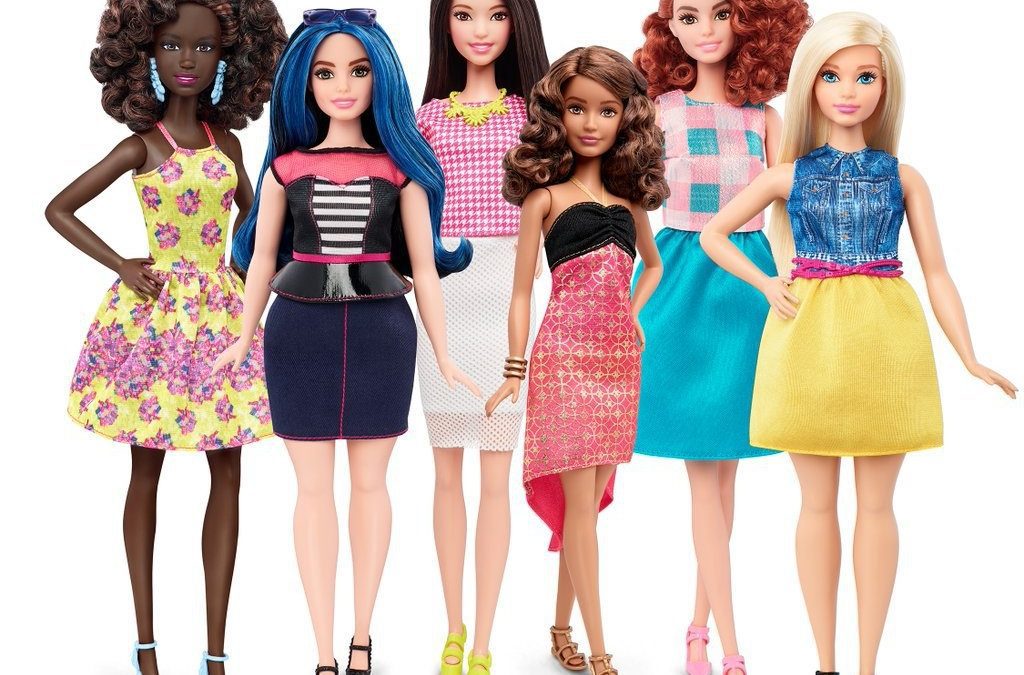
We live in a culture that adores thin women. To be thin represents the ideal body image and in fact, is also often associated with success and confidence. The media worships thin “beautiful” women on the red carpet in Hollywood or in fashion magazines around the globe. For women this ideal image of beauty has been a long standing struggle.

The obsession with being thin has led to many disturbing eating disorders for women. In fact, a recent estimate of the lifetime prevalence of eating disorders is provided by the National Comorbidity Survey Replication, a face-to-face household survey of 9.282 individuals. According to this survey, 0.90% of women are suffering from Anorexia Nervosa, 1.5% from Bulimia, and 3.5% from Binge Eating Disorder. Altogether, about 9.18 million women have struggled with an eating disorder.

This battle with body image starts at an early age for females but is especially prevalent (or at least more often reported) in high school and college age females.

With this in mind, I looked for experts in this field to better understand this disorder among young women today. Eating for Life Alliance (ELA) is a non-profit organization that provides educational resources on the prevention and treatment of eating disorders to colleges and universities nationwide. I posed some questions about eating disorders in young women to ELA co-founders, Whitney Post and Dawn Hynes. I met Whitney last year at the Massachusetts Conference for Women and was immediately enamored with her passion and mission to help young women

1.       How prevalent are issues of body image and eating disorders for young women today? The issue is quite pervasive; 91% of women recently surveyed on a college campus had attempted to control their weight through dieting, 22% dieted “often” or “always.”  Also, an estimated 64% of college women exhibit some degree of eating disorder behavior. And on college campuses, administrators report a 24.3% rise in reports of eating disorder concerns among their students.

2.       Is diagnosis or identification of the problem an issue? Absolutely! Eating disorders are of the most secretive of mental health issues and often go untreated because of the lack of awareness, education, and resources available.  Although there is a lot of hope for those struggling, and recovery is possible with the right interventions, support and effort, it can be a challenge to get some people to treatment.  According to the Eating Disorders Coalition (whose mission is to advance the federal recognition of eating disorders as a public health priority), eating disorders can be successfully and fully treated to complete remission, but only 1 in 10 people with eating disorders receive treatment. And for those who do get help, only 35% do so at a specialized facility for eating disorders.

3.       Why do you feel it’s more prevalent now? The big picture is that we live in a culture that sets up women, and increasingly men, for body dissatisfaction.  Our culture promotes an impossible physical ideal, and then litters the media with advertisements and messages that having the perfect body will in some way solve all problems.  Unfortunately, there are no advertisements for how to deal with challenging emotions that are the real issue.  It is also often ”invisible” — people can struggle for a long time and still perform in their daily lives, at school, etc., but be emotionally distressed and physically compromised at the same time.  And for women in particular, although some may never struggle in earnest themselves, statistics reveal that they will know someone who does, so understanding this issue and knowing how to talk about it is invaluable.

4.  What is ELA and why did you start this organization? The name Eating For Life Alliance was chosen purposely for its positive focus – ideally we would all be eating and thinking about our bodies in a way that supports life, not its destruction.  We are professionally and personally invested in bringing about a real and lasting change to eating and body image pathology.  On a professional level, we have years of experience providing eating disorder treatment, consultation, and advocacy.  Our personal investment comes from Whitney’s history of an eating disorder that started in college; in the absence of proper recognition treatment, that disorder continued for almost two decades.  Dawn worked as a volunteer for a suicide hotline, and saw that a huge percentage of those calling were local college students dealing with an eating disorder.  These experiences resulted in ELA’s leadership to commit to being part of the solution, by working to support college students with these issues.

5.       What resources are available for young women? Excellent resources do exist – there are more and more high quality treatment facilities and advocacy organizations, and an increasing number of clinicians are being specially trained in working with eating disorder and body image issues.  In addition, there is more research being conducted on causes and effective treatment.  That being said, these resources aren’t available in all communities.

6.       How can people get involved in ELA or access help from your organization? Visiting the website is the best way to get information. The simplest way to support ELA is to join the alliance on our site – there is no cost, it takes under a minute and it helps support our mission. Additionally, people have volunteered their expertise and resources since the beginning of ELA.  We are currently focusing on fundraising efforts, and looking for advisors with expertise in this area as we build our board.  We are also eager to work with individuals who may be willing to host fundraisers of any size to benefit our organization.


Have you ever suffered from an eating disorder or poor body image or perhaps know of someone who struggles with this? If so, please get them the help they need to get healthy!

If you have a daughter, what steps do you take to instill confidence and self-esteem in her?

Revisiting the Double-Bind

Women have had to deal with the double-bind or “backlash effect” in business for decades and it has frequently been the topic of many discussions about how women can overcome this prejudice to advance their careers.

In a nutshell, this double-bind is:

To be successful, you must be assertive and confident, but if you are aggressive as a woman you are sometimes punished for behaving in ways that are contrary to the feminine stereotype.

Now, there is a new study from Stanford Graduate School of Business that shows:

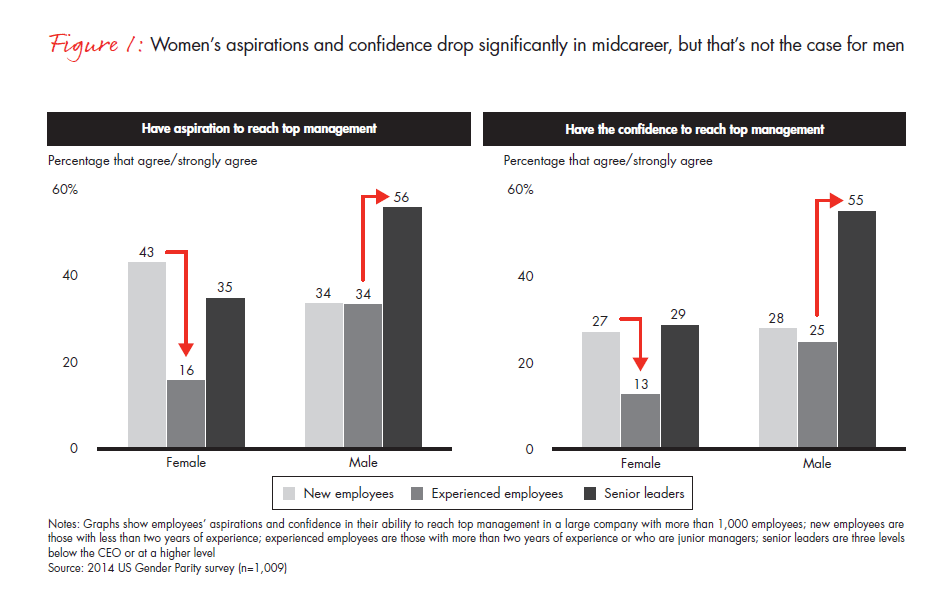
In the business world, women who are aggressive, assertive, and confident but who can turn these traits on and off, depending on the social circumstances, get more promotions than either men or other women.

The research suggests that for women to be successful they must simultaneously present themselves as self–confident and dominant while tempering these qualities with displays of communal characteristics.

Women who had more masculine traits (defined as aggressive, assertive, and confident) AND who could temper their behavior (self-monitor their behavior) depending on social circumstances, were actually more successful than either men or other women.

The key is to learn how to self-monitor your behavior. It is still vitally important to assert yourself confidently in the business environment. If you want to advance your career, you need to establish visibility and credibility for yourself. People associate competence with confidence so the more confident you are, the more others will perceive you as competent.

“There is no evidence that ‘acting like a lady’ does anything except make women more well liked,” O’Neill said. “Women with ultra–feminine traits, in fact, are still seen as less competent in traditional managerial settings.”

That being said, it is also important to know when to listen, acknowledge others, and work and empower your team. When your behavior comes across as too self-serving, you will get that “backlash effect”.

“The interesting thing here is that being able to regulate one’=’s masculine behavior does not simply put women on par with men, it gives them even more of an advantage,” notes O’Neill. “This shows that for women who do want success at the managerial level, the paths are there.”

This is certainly encouraging news. Yet I find that learning to assert oneself appropriately in the work place, still remains an issue for many women.

What are your thoughts about the double-bind?

Is Your Self-Esteem Based on the Products You Buy?

July 25, 2011 · Posted in creativity, life lessons, self-esteem, Success, Women in Business · Comment 

Did you know that if you use an Apple computer, you may actually be more creative because the Apple brand stands for creativity?
Did you know that using a generic cell phone battery can make you feel less attractive than a name brand?

Honestly, I had no idea any of this was true. So I was very surprised when I read this article by Heidi Grant Halvorsan in Huffington Post this week about how our use of certain brands can have an impact on our behavior and self-esteem.

I have always thought that when we have a strong foundation of core values, our self-esteem is less influenced by external factors. A strong sense of self is like our rudder in a storm; always keeping us on track and focused. The studies cited in this article, however, demonstrate that we can be easily distracted and set off course by simply using generic versus well-known trusted brands.

Most of us assume that this sort of thing stops in childhood — when being given the less expensive version of the toy, sneakers or designer jeans you really wanted is a source of embarrassment as well as disappointment. These studies suggest that as adults we continue to unconsciously see our own worth to some extent as a function of whether or not we buy, or are given, the “good version” of the products we use.

What do you think? Do you feel more attractive wearing designer clothes? I know this was definitely true for me at one point in time. My wardrobe contributed to my sense of accomplishment and I admit I probably felt more attractive. Now I feel better if I find a bargain and save money. The savings makes me feel better about myself.

What’s the message here? Should I now coach all my clients to buy only the best recognized brands if they want to increase their self-esteem? If they want to be creative, do they need to buy an Apple computer? Are we really that easily influenced or is it because we don’t have a strong sense of self and self-worth that we can be swayed by such seemingly shallow actions? Or is it that these products have done such an amazing job convincing us that their brand will change our lives for the better?

I’m really not sure that we need to buy the most expensive and the  “best version” of every products to feel better about ourselves. Maybe just being aware of the impact that advertising has on us is enough.

What are your thoughts? How strong is your sense of self-worth connected to the products you purchase?

Is it possible to discover and connect with your own values regardless of the brands you use?

A Lesson in Self-Esteem: Does Everyone Deserve a Trophy?

I think parenting is the most difficult role we have as adults. Sure, we might have tough decisions to make about our careers, our relationships, our lifestyle. But nothing compares to the anxiety we have about raising our children.  We want the best for our children. We want our children to be happy and successful and there is no clear road map on how to accomplish this.

I read an interesting article by Lisa Gottlieb in the July/August issue of The Atlantic, How to Land Your Kid in Therapy. What was of particular interest to me in her article was how we, as parents, try to provide the perfectly happy childhood for our children and actually make it harder for them to grow up. In fact, Gottlieb says that in our efforts to boost our children’s self-esteem, we are actually causing more anxiety and depression and lower self-esteem.

How does this happen? According to the author and her quoted experts, we give our children an inflated view of their specialness. We are constantly telling them how special and talented they are because we live in a culture where everyone wins and gets a trophy. Our goal is to have happy and self-confident children, and yet, we are protecting them from accurate feedback.

I was particularly interested in what the article says about how we affect our children’s self-image because I now coach many adults who want to advance their careers and promote themselves but seem to have lost their connection to their value and talent.

Could it be, in fact, that we were told as children how talented we were when we knew in our gut that this was not always accurate? Could it be that we received constant praise that we felt was not deserved? Perhaps we got the trophy for “Most Improved” soccer player because everyone had to get a trophy.  Maybe at the time we were even a little embarrassed to get the trophy. We knew that we stunk at soccer so what was all the fuss about? In other words, we felt that the praise was unjustified and we didn’t really have the talent at all.

If everything becomes special, than nothing is special in the end.

The author says, “the irony is that measures of self-esteem are poor predictors of how content a person will be, especially if the self-esteem comes from constant accommodation and praise rather than earned accomplishment. “

The message here is that what we need to focus on for ourselves (and our children as well) is what truly makes us wonderful and unique. What have been our earned accomplishments (because we all have some!)? If we make false claims, our efforts at promoting ourselves will not be authentic and will backfire. We will lose our belief in ourselves and will, therefore, have difficulty communicating our value to others.

Think hypothetically about receiving a trophy you knew you didn’t deserve and how you would feel. Now shift gears and think about winning a trophy for your earned accomplishments and successes.

Every day every one of us deserves a trophy for something that we actually accomplished.

What was your trophy for today?

Living an Authentic Life

We now live in a transparent world. Our personal and professional stories reside on the internet and will remain there in perpetuity. Our resumes, our profiles, our photos, videos, testimonials will endure long after our lifetime.

It seems that everyone knows everything about you. But how well do you know yourself? Are you living an authentic life?

We all have core values that define the essence of who we are. Quite simply, mine are based on the importance I place on my family and friends and living an active, healthy lifestyle. Other important values are integrity, respect, good work ethic. Once I define my core values, I can ask myself how well does my life align with these values? For, in fact, to live an authentic life, I should make my decisions based on these values.

By example, I may have a choice to go kayaking with friends or stay at home and eat a big bowl of ice cream (mmmmm!) The choice that best aligns with my personal core values is kayaking with friends. If I choose to eat the ice cream instead, it would not align with the value I place on living an active healthy lifestyle. I might enjoy the ice cream, but probably wouldn’t feel very good about myself afterwards. That decision would not be in alignment with my core values; the essence of who I am.

Another example may be that you are asked to take a long business trip for your company and as a result, you will miss an important family event. You agree to go on the trip, but don’t feel good about yourself because you value your family more. (We are always faced with these types of decisions and in fact, we don’t always feel we have a choice).

The point is that in order to live an authentic life,  our core values should drive all our actions and decisions. When our decisions are in alignment with these values, we are living an authentic life and feel good about ourselves.

So how do you stay on track? The first step is to identify your core values and write them down. When you are faced with tough decisions (this is unavoidable as we face them everyday), look at your list of values. Understand that you will feel the best about yourself when your decision aligns with your values. Understand also, that you may not always feel you can make the choice that is best aligned with your values. When this occurs, we are making sacrifices and don’t always feel good about ourselves as a result.

Your core values are not only the foundation of who you are, but also your best road map to living an authentic life; a life in which you feel great about yourself and your decisions.

How to Talk to Little Girls

July 3, 2011 · Posted in Communication, gender diversity, life lessons, self-esteem · Comment 

This is a guest post by Lisa Bloom, author of The New York Times best-seller, Think: Straight Talk For Women to Stay Smart in a Dumbed-Down World

I went to a dinner party at a friend’s home last weekend, and met her five-year-old daughter for the first time.

Little Maya was all curly brown hair, doe-like dark eyes, and adorable in her shiny pink nightgown. I wanted to squeal, “Maya, you’re so cute! Look at you! Turn around and model that pretty ruffled gown, you gorgeous thing!”

But I didn’t. I squelched myself. As I always bite my tongue when I meet little girls, restraining myself from my first impulse, which is to tell them how darn cute/ pretty/ beautiful/ well-dressed/ well-manicured/ well-coiffed they are.

What’s wrong with that? It’s our culture’s standard talking-to-little-girls icebreaker, isn’t it? And why not give them a sincere complement to boost their self-esteem? Because they are so darling I just want to burst when I meet them, honestly.

Hold that thought for just a moment.

This week ABC news reported that nearly half of all three- to six-year-old girls worry about being fat. In my book, Think: Straight Talk for Women to Stay Smart in a Dumbed-Down World, I reveal that fifteen to eighteen percent of girls under twelve now wear mascara, eyeliner and lipstick regularly; eating disorders are up and self-esteem is down; and twenty-five percent of young American women would rather win America’s next top model than the Nobel Peace Prize. Even bright, successful college women say they’d rather be hot than smart. A Miami mom just died from cosmetic surgery, leaving behind two teenagers. This keeps happening, and it breaks my heart.

Teaching girls that their appearance is the first thing you notice tells them that looks are more important than anything. It sets them up for dieting at age 5 and foundation at age 11 and boob jobs at 17 and Botox at 23. As our cultural imperative for girls to be hot 24/7 has become the new normal, American women have become increasingly unhappy. What’s missing? A life of meaning, a life of ideas and reading books and being valued for our thoughts and accomplishments.

That’s why I force myself to talk to little girls as follows.

“Maya,” I said, crouching down at her level, looking into her eyes, “very nice to meet you.”

“Nice to meet you too,” she said, in that trained, polite, talking-to-adults good girl voice.

“Hey, what are you reading?” I asked, a twinkle in my eyes. I love books. I’m nuts for them. I let that show.

Her eyes got bigger, and the practiced, polite facial expression gave way to genuine excitement over this topic. She paused, though, a little shy of me, a stranger.

“I LOVE books,” I said.  “Do you?”

Most kids do.

“YES,” she said. “And I can read them all by myself now!”

“Wow, amazing!” I said. And it is, for a five year old. You go on with your bad self, Maya.

“What’s your favorite book?” I asked.

“I’ll go get it! Can I read it to you?”

Purplicious was Maya’s pick and a new one to me, as Maya snuggled next to me on the sofa and proudly read aloud every word, about our heroine who loves pink but is tormented by a group of girls at school who only wear black. Alas, it was about girls and what they wore, and how their wardrobe choices defined their identities. But after Maya closed the final page, I steered the conversation to the deeper issues in the book: mean girls and peer pressure and not going along with the group. I told her my favorite color in the world is green, because I love nature, and she was down with that.

Not once did we discuss clothes or hair or bodies or who was pretty. It’s surprising how hard it is to stay away from those topics with little girls, but I’m stubborn.

I told her that I’d just written a book, and that I hoped she’d write one too one day. She was fairly psyched about that idea. We were both sad when Maya had to go to bed, but I told her next time to choose another book and we’d read it and talk about it. Oops. That got her too amped up to sleep, and she came down from her bedroom a few times, all jazzed up.

So, one tiny bit of opposition to a culture that sends all the wrong messages to our girls. One tiny nudge towards valuing female brains. One brief moment of intentional role modeling. Will my few minutes with Maya change our multibillion dollar beauty industry, reality shows that demean women, our celebrity-manic culture? No. But I did change Maya’s perspective for at least that evening.

Try this the next time you meet a little girl. She may be surprised and unsure at first, because few ask her about her mind, but be patient and stick with it. Ask her what she’s reading. What does she like and dislike, and why? There are no wrong answers. You’re just generating an intelligent conversation that respects her brain. For older girls, ask her about current events issues: pollution, wars, school budgets slashed. What bothers her out there in the world? How would she fix it if she had a magic wand? You may get some intriguing answers. Tell her about your ideas and accomplishments and your favorite books. Model for her what a thinking woman says and does.

And let me know the response you get at www.Twitter.com/lisabloom.

Here’s to changing the world, one little girl at a time.

© 2011 Lisa Bloom, author of Think: Straight Talk For Women to Stay Smart in a Dumbed-Down World

Author Bio
Lisa Bloom
, author of Think: Straight Talk for Women to Stay Smart in a Dumbed Down World, is an award-winning journalist, legal analyst, trial attorney, and the daughter of renowned women’s rights attorney, Gloria Allred.

A daily fixture on American television for the last decade, Bloom is currently the CBS News legal analyst, appearing frequently on The Early Show and CBS Evening News with Katie Couric, as well as the legal analyst for The Dr. Phil Show. Bloom appears regularly on CNN and HLN prime time shows such as Issues With Jane Velez-Mitchell, The Joy Behar Show, Anderson Cooper 360, and The Situation Room. She has been featured on Oprah, Nightline, Today, Good Morning America, Rachael Ray, and many more, and she was a nightly panelist on The Insider throughout 2010. From 2001-2009, Bloom hosted her own daily, live, national show on Court TV, and she has guest-hosted Larry King Live, The Early Show, and Showbiz Tonight.

Bloom has written numerous popular and scholarly articles for the Los Angeles Times, Family Circle, the National Law Journal, CNN.com, the Daily Beast, and many more.      She has also been profiled, featured, and quoted in hundreds of publications, including the New York Times, the Washington Post, Elle, Ladies’ Home Journal, and Variety.


For more information please visit http://think.tv/ and follow the author on Facebook and Twitter

Leave Your Ego at the Door

I just got back from my Saturday morning yoga class. I look forward to this class all week to help me deal with the stress my body seems to store up all week long. I don’t profess to be a yogi. In fact, my body tends to be tight from years of running and traveling for work. (That’s why I really need this class.) But most of all, I need the lessons from the yoga instructor who tells us every week to leave our egos at the door and go with the flow.

As I was driving home from the class today, I began to think more about how difficult it is to leave our egos out of our daily activities. I was thinking specifically about self-promotion. Is it all ego driven?

My intent is not to get into a heavy philosophical discussion here, but this is intriguing to me. Yes, our ego will push us to be the best we can be; to advance our careers and take advantage of opportunities that present themselves. Thinking strategically about our career can in itself be ego-driven I suppose. What I have discovered in my work with female professionals is that when they lack a strong sense of self-esteem, self- promotion is much more challenging.

I decided to find out exactly what the difference is between self-esteem and ego  and found some clarity.

According to this online dictionary, self esteem is ” a balanced and unexaggerated self respect and self love. It combines a healthy regard for the self with a healthy regard for others. Healthy self esteem esteems others as equally as the self. Others are treated and regarded as respectfully as the self.”

Ego, on the other hand, always believes in its own self importance above the importance of others. Ego always requires outside approval, validation, and constant attention and gratification. Ego believes in its own superiority above all others. Some versions of ego insist on inferiority as a role. Both inferiority and superiority are lies though, and variations of the same theme — of feeling “less than” others.”

If you agree with these definitions, than self-promotion is not necessarily an ego-driven activity. It truly depends on what motivates your actions. It is possible that the act of promoting yourself can come from a place of healthy self-esteem. In fact, that’s the more desirable approach because when you believe in yourself, you promote yourself with authenticity. It’s this authenticity that will improve your self-promotion efforts. You are more credible when you believe in yourself. Self-confidence comes across to others as competence.

It’s when you are motivated solely through your ego, that self-promotion takes on the qualities that most of us detest. This type of self-promotion comes across as bragging and pushiness.

Lesson: Leave your ego at the door.

Stay connected with your unique qualities and strengths and promote yourself authentically. Don’t try to prove your superiority over others. Staying true to yourself and your talent will get you much more attention in the long run.

Are You Connected to Your Value?

Think about it. When do you feel the most stress at work? According to author Tony Schwartz in a recent post on Harvard Business Review, we feel the most stress when our value is threatened.

Across more than 200 studies of the effects of stress, researchers have found that the highest rises in cortisol levels — meaning the most pernicious “fight or flight” response — are prompted by “threats to one’s social acceptance, esteem and status”.

When someone puts us down or criticizes us, we not only get upset and feel under- appreciated, but very often we move into a defensive state of mind.

To feel valued (and valuable) is almost as compelling a need as food. The more our value feels at risk, the more preoccupied we become with defending and restoring it, and the less value we’re capable of creating in the world.

Two things struck me as significant in this statement. First, are we so disconnected to our value that someone elses criticism can throw us off guard and upset us? And as a result of this disconnect, how is it possible that we become so focused on defending our value that we can actually lose our value in the process?

First let me address the disconnection. Our lives are so crazy busy these days, it’s all we can do to keep up with our responsibilities at home and at work. Everyday we are running at full speed and focusing on completing our to-do list. How often do we take the time to identify our strengths and establish a lasting connection to our value? Without a strong connection to our value, we are trying to navigate a boat through strong currents without a rudder.

Tony Schwartz suggests, “Our challenge is always to reconnect to our own core value — even when someone else’s criticism cuts deep. What that requires, first and foremost, is compassion for ourselves.”

I think we need to take this one step further and intentionally make the connection to our core value. Take the time to identify what makes you unique; your strengths. Make a note each day of your accomplishments and successes in a journal and think about what these achievements say about you. This is your value proposition. No one can take this away from you. It is the foundation of how you promote yourself at work. This is your rudder.

With this connection to your value, no one will be able to set you so off course that your only new course is to defend yourself. Stay focused on your value and even if you are temporarily upset when someone puts you down, you will be able to quickly get back on track.

You Gotta Crow: The Benefits of Bragging

Do you remember Peter Pan telling Wendy “I’ve Gotta Crow”? Wendy says to him, “Oh Peter, you’re so conceited”, and he replies with his song:

It’s just that I am what I am

And I’m me!

I look at myself

And I see in myself

All the wonderful things that I am

If I’m pleased with myself

I have ev’ry good reason to be.

What do you see in your mirror? My guess is your focus in more related to your perceived flaws that “all the wonderful things” that are unique and wonderful about you.

That being said, I think that somewhere deep down we all understand that we do have wonderful things to brag about, but we bury them because bragging is not acceptable in our society, especially for women. Sometimes we bury the positives so well it’s difficult to uncover them. The consequence is that we become disconnected to our positive qualities and more connected to what we consider to be our weaknesses. Just ask any woman to talk about her weaknesses and see how long she can discuss the topic versus her difficulty acknowledging her accomplishments.

Of course, this is all intimately related to self promotion. It is vitally important to stay connected to your value and believe in yourself in order to promote yourself.

How do you do that?

Well, maybe we should all practice bragging!

I’m not saying that we should brag in public because I know that often backfires. What I am recommending is that you practice bragging to yourself. Every day find at least one thing to “crow” about. In fact, put bragging on your to do list. Brag a little, pat yourself on the back for your accomplishments and all your unique qualities.

One daily dose of bragging will boost your immune system and self confidence, and help you stay intimately connected with your value.

What would you like to brag about today? Write a comment!

Why Are You Fighting So Hard Not to Be Yourself?

When I was a little girl, I wanted to be a prima ballerina. I loved to dance and was fortunate enough to take ballet lessons a few times a week. In my mind, I was on my way to becoming a professional dancer. In fact, I took my ballet shoes with me wherever I went and offered to dance for anyone without hesitation. I had no preconceived notions about my limitations. I had the passion and talent and believed anything was possible.

But somewhere along the way, I received messages that being a ballerina was not for me. I did not have the” right”  body type and certainly the lifestyle of a professional dancer was extremely challenging. The point is that all that energy and passion for dancing; all my dreams of being a prima ballerina were squashed. I no longer believed that I could be whatever I wanted to be. I began to see my life in terms of limitations.

We build our persona or our identity based on what we believe we can or can’t do. In fact, these beliefs define our lives and predict our future. We become prisoners of our own perceived limitations.

How tough would it be for you to push aside your limiting beliefs and open yourself up to a new world of possibilities?

How difficult would it be to listen to your true inner voice and find your passion and purpose in life?

In this inspiring video, Caroline Casey asks, “Why are you fighting so hard not to be yourself?” Her key message is that we pretend to be something we’re not because we lost our belief in ourselves.

Believing in yourself without limitations, without labels, allows you to be the best you can be. Are you up for the challenge?

Watch Caroline and let me know.

Click here to watch.

« Previous PageNext Page »


  • Bonnie Marcus, M.Ed., C.E.C.
    Founder and Principal
    508-696-0038

    Click here to find out how Bonnie can help you achieve the success you desire.
  • Forbes Women Top 100 Website

    Name
    Email

    Forbes Women Top 100 Website

  • 20 Minutes For $20

    20 Minutes of Interviewing Coaching For Only $20...

    Present yourself with confidence!

  • Recent Blog Posts